
Claude’s GEO Crackdown: Earned Media Is the Real AI Visibility
Anthropic banned using Claude for fake GEO tactics. Prism PR CEO Rick Pendrick on why earned media is the AI visibility that lasts, and what…

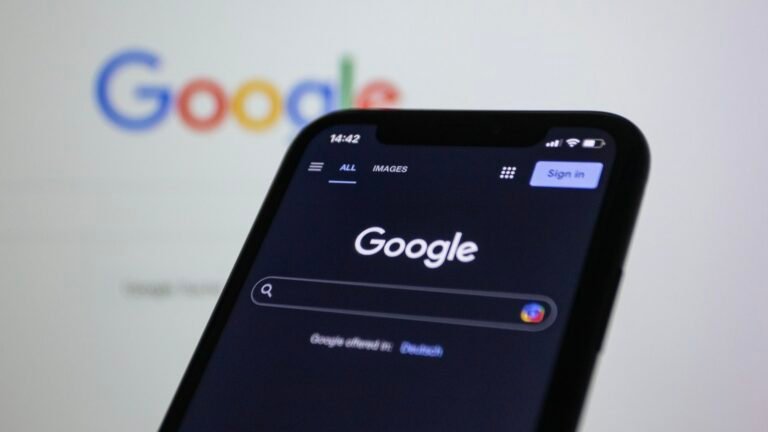
You type a question into Google. The answer sits right there at the top of the page. You read it, close the tab, and never visit a website. That is a zero-click search, and it now describes most of what people do on Google.
If you run a company, this should change how you think about visibility. A zero-click search means a customer got what they needed and your website never saw the visit. In this post, I will explain what zero-click search is, how common it has become, what it does to your traffic, and what I tell clients to do about it. The short version: the goal is no longer only to get the click. It is to be the name in the answer.
A zero-click search is a search where the person gets their answer on the results page itself, so they never click through to a website. The answer might be a featured snippet, a weather box, a map with phone numbers, a calculator, or, increasingly, an AI-written summary.
The idea of zero-click search is not new, but the scale is. SparkToro’s 2024 zero-click search study, built on clickstream data from Datos, found that 58.5% of American Google searches in 2024 ended with zero clicks. Some people ended their session entirely, and others simply changed their search to something else. Only 37.4 clicks per 100 searches went to the open web.
Put plainly, if you were counting on Google to send you visitors for every search where you rank, most of those searches never send anyone to anyone.
Three things are pushing it.
Google answers more questions itself. Featured snippets, “People Also Ask” boxes, local packs, and knowledge panels all keep people on Google. Each one is built to answer the question before the click.
AI summaries sit above the links. Google’s AI Overviews and AI Mode write an answer from several sources, and the reader often stops there. If you want the background on how those features work, I explain how SEO and AEO work together on our SEO and AEO page.
People now ask AI tools directly. SEO and AEO mean showing up when people search on Google and when they ask AI tools like ChatGPT, Claude, and Gemini. In an AI chat, there is often no list of links at all. The answer is the whole experience.
The clearest evidence on AI summaries comes from the Pew Research Center. Pew tracked the browsing of 900 U.S. adults in March 2025 and compared what happened when Google showed an AI summary and when it did not.
The gap is large:
Pew also found that 18% of the Google searches in its study produced an AI summary, and that the share climbs for longer, question-style searches. For searches of 10 words or more, 53% produced one. That matters because the questions buyers ask about vendors tend to be long and specific, such as “what is the best PR agency for a small software company.”
So the honest picture is this. Clicks from search are being squeezed, and the squeeze is worst on exactly the kind of researching question a buyer asks before hiring someone.
No. I hear this question constantly, and the answer is that the job changed, not the need.
Ranking still matters, because pages that rank are the pages that get read, summarized, and cited. Backlinks still matter. What changed is what you measure. A click is one outcome. Being named in the answer is another, and for many buyers it is the first impression of your company.
Think of it the way I thought about media coverage in my corporate years. A story in a major outlet does not always send a flood of visitors. It makes your name credible to everyone who reads it, and some of those people come looking for you later. Zero-click search works the same way: a zero-click search can still build your name. Visibility has value even when it does not show up as a visit in your analytics.
That is why I now tell clients to track three things together:
If the answer is the destination, you want to be part of the answer. Here is what I do and what I recommend.
AI tools lean heavily on sources they consider independent. Muck Rack’s May 2026 report, What Is AI Reading?, analyzed more than 25 million links cited by ChatGPT, Claude, and Gemini. It found that about 84% of AI citations came from earned media. In that report, “earned” is broad. It includes journalism, academic research, government sources, and encyclopedic sites like Wikipedia, not only news stories.
The takeaway for a company facing zero-click search is simple. The way to appear in these answers is to be written about by sources that are not you. That is a PR job. I explain the difference in earned media vs paid media.
A story in a respected outlet that links to your website does two jobs at once. It gives readers a path to you, and it tells search engines and AI tools that a trusted source vouches for you. At Prism, every story we place is built to carry a backlink, and I explain how outlets are scored in What Is Domain Rating?
Reporters and AI tools both cite facts that did not exist before. That is why we build newsworthy, data-driven industry studies for clients. We analyze public data, find a national trend, and rank every state. National journalists write the story, it runs on the client’s blog after approval, and then we pitch national, trade, and local media. Our 2026 industry study campaigns average 20.8 stories a month, each carrying a backlink.
You can see how that plays out in our live dashboard for our client CareScout, showing what we’ve secured over the last 9 months, which was a full-service campaign, including these monthly studies.
Your own pages still matter. Put a clear, direct answer near the top of each page, in plain sentences. Use headings that match the questions buyers ask. Add FAQ sections, as I do at the bottom of this post. A page that answers the question in two sentences is easier for Google and for AI tools to lift.
Use the same company name, description, and leadership bios across your website, your press pages, and your profiles. When ten sources describe you the same way, an AI tool is more likely to describe you the same way.
Do not chase every snippet in zero-click search. Winning a snippet for a simple fact question can hand your answer to Google with no visit in return. Aim for questions where the person still needs you after the answer, such as “who can help with this.”
Do not give up on traffic. Clicks are fewer, not zero. People who do click after reading a summary are often further along in their decision.
Do not buy your way in. Paid or sponsored placements do not earn the independent credibility that makes a source worth citing.
We are an award-winning, full-service PR agency, and also a digital PR and linkbuilding firm. We pair earned media with SEO and AEO so that every story is online, carries a backlink, and helps your company get named when people search on Google or ask an AI tool.
If you want to test it first, our pay-for-performance pilot starts at $1,999 for a newsworthy, data-driven industry study. Each do-follow backlink we earn is billed by Domain Rating, and if there are no backlinks, there is no invoice. You can read more about our approach to SEO and linkbuilding, and about pitching reporters the right way.
A zero-click search is a search where the person gets their answer on the results page and never clicks through to a website. Examples include featured snippets, local results, quick answers, and AI-generated summaries.
SparkToro’s 2024 study, using Datos clickstream data, found that 58.5% of American Google searches ended with zero clicks. The figure varies by device and by study method.
Pew Research found that users who saw an AI summary clicked a traditional result link in 8% of visits, compared with 15% for users who did not see one.
No, and neither is AEO. Pages that rank and earn backlinks are still the pages that get read, summarized, and cited. What has changed is the measure of success: being named in the answer now counts alongside getting the click.
Earn coverage from independent sources. Muck Rack’s analysis of more than 25 million links cited by ChatGPT, Claude, and Gemini found that about 84% of AI citations came from earned media, a category that includes news, academic, government, and encyclopedic sites.
Track branded search, mentions of your company in AI answers, and leads or referrals alongside website traffic. Traffic alone no longer shows how visible you are.
Zero-click search is not a trend to wait out. Zero-click search is now the default. Most searches already end without a visit, and AI summaries are pushing it further. The companies that do well are the ones that get written about by sources people and AI tools trust, carry backlinks on those stories, and measure visibility, not only visits.
If you want to be the name in the answer, talk to us or browse our case studies.
Keep Reading
Anthropic banned using Claude for fake GEO tactics. Prism PR CEO Rick Pendrick on why earned media is the AI visibility that lasts, and what…
How to get your brand cited by Perplexity: let PerplexityBot read your site, earn coverage on the sites it trusts, and track your citations every…
How Google AI Overviews choose their sources, in plain English: what Google says, what Semrush, Pew, and Ahrefs data show, and how earned media gets…
Get Started
Tell us what you want to be known for. We will show you how earned media gets you there.